Introduction
When traders initially learn about options, they frequently concentrate on whether the underlying asset will move upward or downward. However, volatility is another crucial aspect of options. If the option was bought at an unfavorable price or if the anticipated movement never materializes, a trader can accurately predict the direction of a market and yet lose money. For this reason, volatility merits further consideration. It aids traders in thinking beyond direction by taking into account the market's anticipated level of movement, the pricing of uncertainty, and whether the cost of an option is reasonable given the opportunity.
What Is the True Meaning of Volatility?
The amount that an asset's price fluctuates over time is sometimes referred to as its volatility. However, volatility is more than just a gage of historical price fluctuations for an options trader. It may also reflect what the market anticipates will happen in the future. Realized volatility and implied volatility are two helpful notions that result from this distinction. Realized volatility examines the actual movements of the market. Option prices are the source of implied volatility, which represents what those prices indicate about future uncertainty. The distinction between the two might lead to both possibilities and dangers.
Realized and Implied Volatility
Let's say a stock has traded quite gently in the past, but traders suddenly anticipate a significant announcement. Implied volatility may rise as a result of increased demand for options. Realized volatility may fall short of what option pricing suggested if the announcement results in a smaller than anticipated change. It is also possible for the opposite to occur. A market could seem calm until an unforeseen circumstance triggers a much bigger move. For this reason, it can be helpful to compare implied and realized volatility. Instead than just assuming that high or low volatility is inherently appealing, it pushes traders to consider whether the market's expectations seem rational.
Questions That Traders May Have
- What is the current pricing movement of the option market?
- What is the difference between implied and historical volatility?
- Is the anticipated migration feasible?
- How much time is left before it expires?
- After entering the transaction, how might volatility change?
- If the underlying scarcely moves, what happens to the position?
- What degree of danger is appropriate?
Not Every Option Has the Same Volatility
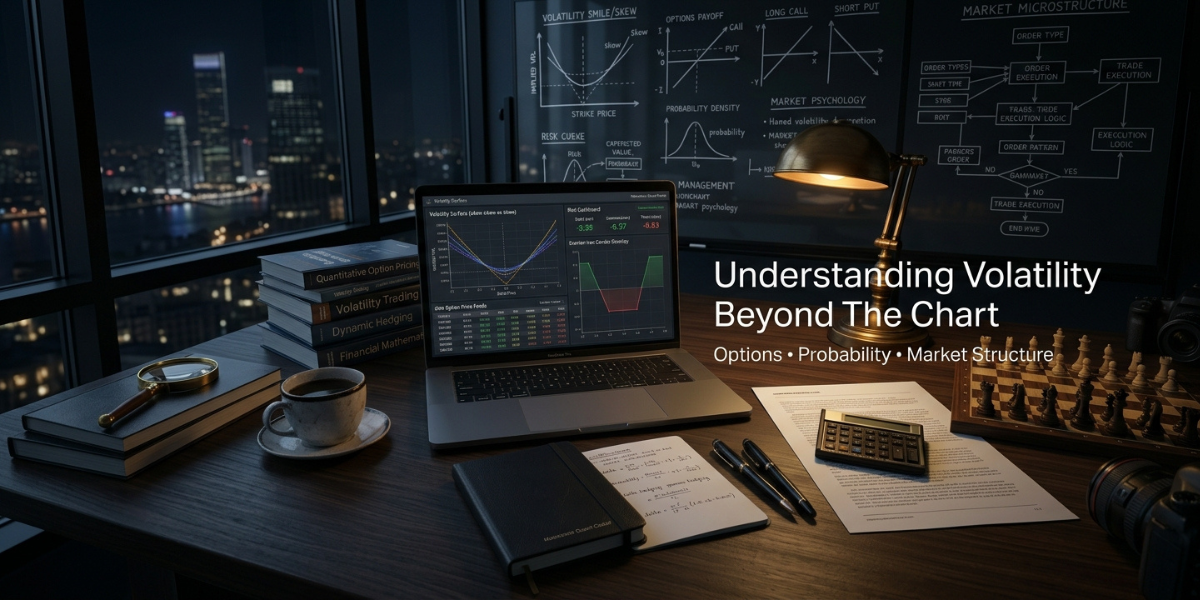
The fact that volatility is not necessarily a single number is another crucial concept. Implied volatility levels might vary depending on strikes and expiration dates. Together, these variables create what traders refer to as the volatility surface. The surface can show how uncertainty is priced by the market at various stages of the options chain. This adds an additional level of examination for quantitative and options traders. Rather than merely asking if volatility is "high" or "low," they might look at areas where volatility is comparatively costly or inexpensive across maturities and strikes. For this reason, the Moontower Quant Codex listing on TradingMonday closely relates to the volatility surface, which is a crucial area of quantitative options study.
Why Volatility Matters for Risk
More than just the price of an option is impacted by volatility. As market conditions change, it may alter a position's risk profile. Even in cases where the underlying asset has not moved significantly, a sudden rise in predicted movement can have a significant effect on options. Because of this, volatility is especially crucial in times of market uncertainty. If a trader simply considers direction, they could miss how shifting volatility impacts their position. A trader who keeps an eye on both direction and volatility has a more comprehensive understanding of the situation.
Options Make Uncertainty Measurable
The fact that options offer a methodical approach to analyzing uncertainty is among its most intriguing features. Different strikes, expiration dates, anticipated movements, and possible results can all be compared by a trader. Understanding how much uncertainty is already reflected in the price is the goal, not eradicating it. By relating technical financial ideas to actual trading scenarios, such as options, futures pricing, volatility, and risk, Moontower's educational approach frequently makes them more applicable. Because traders seldom make judgments with complete knowledge, that pragmatic viewpoint is important.
Final Thoughts
One of the most crucial ideas for comprehending options trading is volatility. A trader's direction indicates what they anticipate the market will do. Another question raised by volatility is how much movement is already priced. Traders can gain a more comprehensive understanding of options by learning to compare implied and realized volatility, look at the volatility surface, and comprehend how shifting expectations impact risk. Predicting every move in the market is not the aim. It is to recognize the cost of uncertainty and make wiser choices when the future is uncertain.